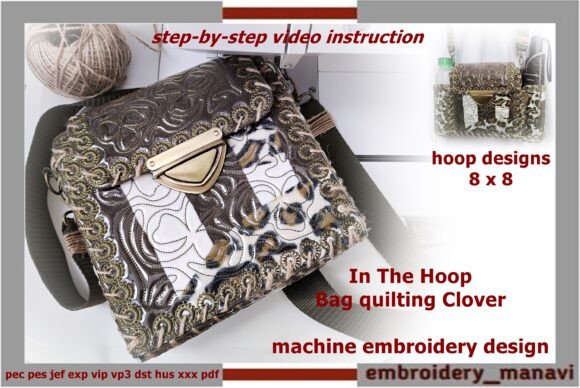
In the Hoop Bag Quilting Clover: A Designer’s Review
As an embroidery designer who has spent years digitizing and testing files for commercial use, I approach every new machine embroidery design with a critical eye. It is not enough for a pattern to look pretty on a screen; it must hold up under the stress of production, washing, and daily wear. Recently, I evaluated the In the Hoop Bag Quilting Clover, a project that bridges the gap between functional accessory creation and decorative branding. For small business owners, Etsy sellers, and boutique creators, this design offers more than just aesthetic appeal—it provides a tangible product opportunity.
First Impressions: Professionalism Meets Handmade Charm
The first thing that strikes you about the In the Hoop Bag Quilting Clover is its versatility. The description highlights a bag with quilting “clover” motifs, featuring pockets for a bottle and an umbrella. This suggests a design that is both rustic and modern, appealing to customers who value utility alongside style. Visually, the clover motif implies growth, luck, and nature, which aligns perfectly with brands in the florist, bakery, or eco-friendly handmade product sectors.
From a design perspective, the "quilting" aspect indicates texture. In commercial embroidery, texture adds perceived value. It transforms a flat piece of fabric into a tactile experience. However, the mention that the bag is assembled by hand using a cord signals that this is not a purely automated process. For a busy embroidery shop, this means labor time must be factored into pricing. The design feels friendly and approachable, yet the structural elements suggest durability. It is not merely decorative; it is built for use.
Real-World Business Applications
When considering how to integrate this digital embroidery file into your business model, think beyond the bag itself. While the primary output is a functional accessory, the design elements can be adapted for various small business merch strategies. Here is how I see this performing in real-world scenarios:
- Boutique Merchandise: Create limited-edition tote bags for local markets. The pockets for bottles and umbrellas make them highly practical for urban customers, increasing the likelihood of daily use and brand visibility.
- Staff Uniforms and Aprons: The clover motif can be extracted and used as an embroidered patch on staff aprons for cafes or flower shops. It adds a cohesive visual identity without overwhelming the uniform.
- Customer Gifts: Smaller versions of the clover design can serve as branded tags or accents on packaging, enhancing the unboxing experience for online orders.
- Event Merch: For spring festivals or Earth Day events, this design resonates with themes of nature and sustainability, making it an ideal choice for promotional items.
The ability to make the bag with or without pockets adds flexibility. For a premium line, include the pockets to justify a higher price point. For a budget-friendly option, simplify the construction. This adaptability is crucial for custom apparel and accessory businesses that need to cater to different market segments.
Technical Considerations for Production
While the concept is strong, execution is where many projects fail. As a designer, I have specific concerns regarding the technical application of the In the Hoop Bag Quilting Clover. Since the description notes that recommendations are included, it is vital to review them thoroughly before cutting fabric. Here are the key technical areas to monitor:
Stitch Density and Fabric Texture
Quilting designs often require higher stitch density to create the padded effect. If you are embroidering on lightweight canvas or cotton, ensure your stabilizer is robust enough to prevent puckering. Test the design on scrap fabric first. If the stitches are too dense, they may perforate the fabric, weakening the structure of the bag over time. Conversely, if the density is too low, the quilting effect will be lost, and the design will look flat.
Hoop Size and Construction
In-the-hoop projects are constrained by the hoop size of your machine. Verify that your equipment can handle the dimensions required for the bag panels. Additionally, since the bag is assembled by hand using a cord, precision in the embroidery placement is critical. Misaligned stitching can make the final assembly difficult, leading to wasted materials and increased labor costs. Always create a printable mockup to visualize the seam allowances and assembly points before running the actual embroidery.
Thread Colors and Contrast
The choice of thread colors will define the brand identity. For a subtle, elegant look, use monochromatic threads that blend with the fabric. For a bold, playful statement, choose contrasting colors that highlight the clover shape. Remember that high contrast can emphasize any minor imperfections in stitching, so ensure your machine tension is perfectly calibrated.
Brand Identity and Customer Trust
Using a well-executed design like the In the Hoop Bag Quilting Clover enhances brand identity. It signals to customers that you care about quality and detail. When a customer sees a neatly embroidered clover on a sturdy bag, they associate that craftsmanship with your entire brand. This builds trust and encourages repeat business.
For handmade brands, consistency is key. Ensure that the visual style of this bag matches your other design assets. If your brand is minimalist, keep the embroidery simple. If your brand is whimsical, feel free to experiment with vibrant thread combinations. The finished product should feel like a natural extension of your existing product line, whether it is cap embroidery, tote bags, or home decor.
Practical Designer Notes for Implementation
Before launching this product, follow these steps to ensure success:
- Test in Black and White: Stitch out the design in single-color thread first to check for clarity and definition. This helps identify any spacing issues without the distraction of color.
- Check Small Patch Viability: If you plan to use the clover motif as a small logo on caps or shirts, test it at a reduced size. Ensure the details remain visible and do not merge into a blob of thread.
- Review Licensing: Confirm the commercial licensing terms of the embroidery file. Ensure you have the right to sell the finished products, especially if you are scaling up production.
- Fabric Testing: Test on the exact fabric you intend to use for production. Different fabrics react differently to quilting stitches. Denim, canvas, and linen will all behave uniquely.
- Client Approval Mockups: If working with B2B clients, provide digital mockups showing the bag in various colors and settings. This helps manage expectations and reduces revision requests.
In conclusion, the In the Hoop Bag Quilting Clover is a promising asset for small business owners in the Accessories and Embroidery categories. It combines functionality with aesthetic appeal, offering multiple avenues for brand expression. However, success depends on meticulous attention to technical details, from stabilizer choice to assembly precision. By treating this design as a serious business tool rather than just a decorative element, you can create high-value products that resonate with customers and strengthen your brand presence.