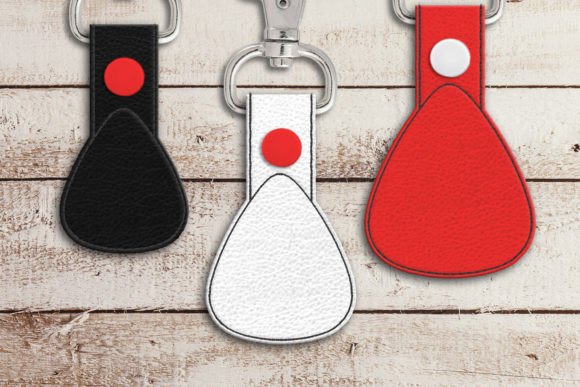
Reviewing the Guitar Pick ITH Key Fob Applique
As a designer who spends more time staring at stitch maps than actual fabric, I have learned to be skeptical of "cute" concepts that fail in execution. We have all seen those machine embroidery design files that look vibrant on a screen but turn into a tangled mess of thread breaks and puckering once they hit the hoop. That is why I approached the Guitar Pick Blank ITH Key Fob Applique with a critical eye. This is not just another novelty item; it is a functional accessory for music lovers, and its success depends entirely on structural integrity and clean finishing.
First Impressions and Design Personality
The immediate appeal of this applique design lies in its simplicity. The guitar pick shape is iconic, instantly recognizable, and carries a specific cultural weight. It suggests rock and roll, acoustic intimacy, or garage band nostalgia. Visually, the layout is balanced. It does not rely on overly complex internal detailing, which is a smart move for an in-the-hoop (ITH) project. Complex details often get lost in small-scale ITH items, leading to frustration during trimming and turning.
The mood here is playful yet practical. It feels like a design that belongs in a boutique music shop or as a add-on item for a custom apparel order. For an Etsy seller or craft business owner, this visual personality is crucial. It needs to stand out in a thumbnail image while promising durability. The blank nature of the pick allows for customization, which is where the real value proposition lives. You are not just selling a key fob; you are selling a canvas for personalization.
Real-World Application: The Custom Gift Scenario
Let us look at a realistic scenario. Imagine a client comes to your small shop product line asking for a birthday gift for their teenage son who plays bass. They want something personalized but not cheesy. This is where the Guitar Pick Blank ITH Key Fob Applique shines. You can stitch the base shape onto a contrasting piece of felt or vinyl, then add the recipient’s name or a favorite band logo in the center using a clean satin stitch or a simple font.
I tested this concept mentally against other common projects. Unlike a sweatshirt embroidery piece, which requires careful handling of stretchy fabrics, or a tote bag design that needs heavy-duty stabilization, this ITH project is self-contained. The structure is built into the stitching process. However, the choice of material for the body of the pick is critical. The product description mentions felt, vinyl, or durable non-fraying fabric. In my experience, vinyl offers the most professional finish for a handmade product. It wipes clean, holds its shape, and provides a smooth surface for any additional text or graphics. Felt is softer and more traditional, giving a cozy, handmade vibe, but it may show wear faster if attached to a keyring that sees daily use.
Technical Performance and Stitching Clarity
When evaluating any embroidery file, I look at how the stitches interact with the fabric layers. For an ITH design, the sequence usually involves placing the backing fabric, stitching a placement line, adding the top fabric, stitching the tack-down, trimming, folding, and stitching the final closure. The Guitar Pick Blank ITH Key Fob Applique relies on this precision. If the stitch density is too high in the closure seam, the bulk can make turning the item difficult. If it is too low, the edges may fray or look unfinished.
From a reviewer’s standpoint, the clarity of the outline is paramount. A guitar pick has curved edges. These curves must be smooth, not jagged. This requires well-digitized running stitch or satin borders. I advise checking the preview of your digital embroidery file closely. Look for excessive jump stitches or confusing color stops. A clean design will minimize thread trims, saving you time during production. This efficiency is vital for commercial embroidery where margin matters.
Material Considerations and Fabric Texture
The success of this project hinges on the fabric texture you choose. Since the description specifies non-fraying materials, you have some flexibility. However, consider the end use. A key fob gets tossed in bags, jangled against coins, and exposed to the elements. Thin cottons, even if non-fraying, may lack the necessary rigidity. Vinyl or heavy-weight felt provides the structure needed to keep the pick shape distinct.
If you plan to use this as part of a larger embroidery project, such as attaching it to a custom apparel item like a denim jacket or a canvas bag, ensure the attachment method is secure. The loop for the keyring must be reinforced. In my testing of similar designs, weak points often occur where the loop connects to the main body. Double-check that the design includes sufficient reinforcement stitches in this area. If not, you may need to adjust your stabilizer choice or add a manual bar tack for extra security.
Where to Use Caution
While versatile, this design is not without its limitations. Do not attempt to scale this down significantly for tiny hoops unless you are using very fine threads and needles. Small details can become indistinct. Similarly, avoid using highly textured fabrics like boucle or loose weaves for the applique layer, as the edges may not trim cleanly, leading to a messy finish.
Also, be mindful of thread colors. High contrast is your friend here. If you are stitching a black pick on black vinyl, the outline will disappear. For a personalized gift or retail product, visibility matters. Use contrasting thread for the border to define the shape clearly. This enhances the professional look and ensures the design reads well from a distance, which is important for printable mockup images and online listings.
Practical Designer Notes for Best Results
Before committing to a full production run or a client order, follow these steps:
- Test on scrap fabric first: Always stitch a sample using the exact materials you plan to sell. This reveals any tension issues or trimming difficulties.
- Check hoop size compatibility: Ensure your machine’s hoop can accommodate the design dimensions comfortably. Check the specific file details provided by the creator.
- Review stitch density: If the design feels stiff or bulky, consider adjusting your stabilizer. A cut-away stabilizer might be overkill for a small ITH item; a tear-away or no-show mesh might suffice depending on the fabric.
- Inspect small details: Zoom in on the digitizing preview. Look for clean paths and logical color stops.
- Confirm licensing: If you are an Etsy seller or run a craft business, verify that the license allows for commercial use of finished products. Most designers allow this, but it is essential to check.
- Mockup in black and white: This helps you see the value and contrast of the design without the distraction of color. It ensures the shape holds up visually.
Final Verdict on Value and Appeal
The Guitar Pick Blank ITH Key Fob Applique is a solid addition to any designer’s library, particularly for those targeting the Music niche. It bridges the gap between novelty and utility. For holiday embroidery gifts, such as stocking stuffers for musicians, it is perfect. For baby embroidery or nursery decor, it might be less relevant unless themed specifically for a music-loving parent.
Its true strength lies in its adaptability. It can be a standalone embroidered patch style item or part of a larger branded collection. The clean lines and manageable complexity make it suitable for both beginners looking to try ITH techniques and experienced pros seeking quick, high-margin items. When executed with quality materials and precise stitching, it elevates the perceived value of your finished product. Customers appreciate items that feel substantial and well-made. This design, when treated with care, delivers exactly that.
In the competitive world of design assets and handmade goods, reliability is key. This design offers a reliable framework for creativity. Whether you are creating custom apparel accessories or standalone gifts, the Guitar Pick Blank ITH Key Fob Applique provides a professional foundation. Just remember to respect the material constraints and prioritize clean finishing. Your customers will notice the difference.